IBDP Programme
Guided by the IB mission of “education for a better world,” the IBDP Programme at ISA Wuhan is designed to develop students with strong academic foundations, critical-thinking skills and an international outlook. Through a rigorous academic framework and a holistic approach to education, the programme prepares students for leading universities worldwide while encouraging them to become thoughtful, responsible and proactive global citizens.
Global Recognition
- Recognised by leading universities worldwide: The IB Diploma is recognised by universities across more than 110 countries and regions, including Oxford, Cambridge and Ivy League institutions.
- Advantages for university progression: Strong IB subject results may be eligible for university credit or advanced standing at selected institutions, potentially reducing the time and cost of undergraduate study.
- Potential English-language exemptions: Some universities may accept qualifying IB English results in place of IELTS, TOEFL or other English-language proficiency requirements.
Rigorous Structure
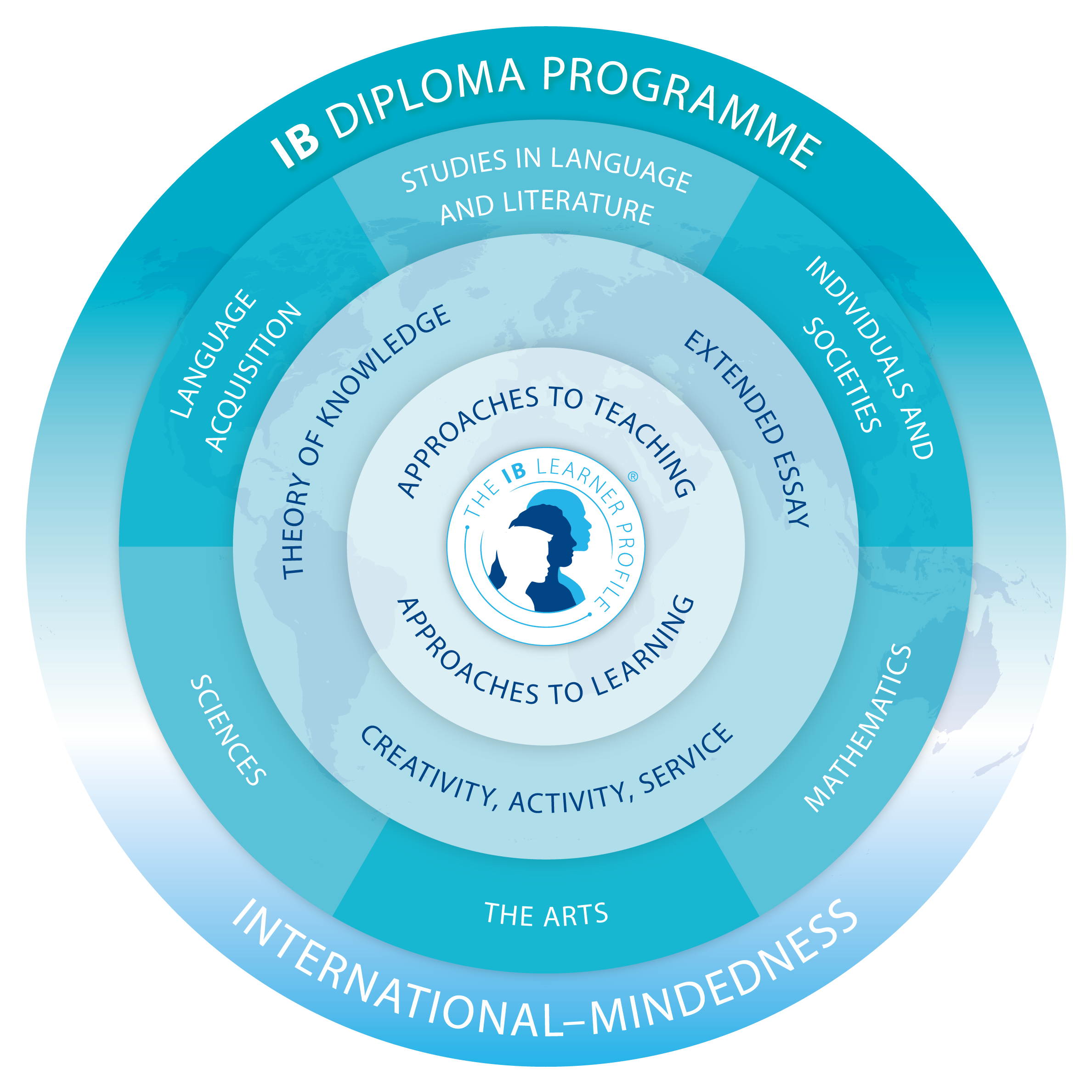
- Six subject groups: Students study across Language and Literature, Language Acquisition, Individuals and Societies, Sciences, Mathematics and the Arts, ensuring a broad and balanced academic programme.
- Three core components: Theory of Knowledge (TOK) develops interdisciplinary and critical thinking; the Extended Essay (EE) builds independent research skills; and Creativity, Activity, Service (CAS) encourages learning beyond the classroom.
- Breadth and depth: Students take a combination of Higher Level (HL) and Standard Level (SL) subjects across different academic areas, balancing subject breadth with academic depth.
Holistic Development
- IB Learner Profile: The programme encourages students to become inquirers, knowledgeable thinkers, principled individuals, effective communicators and lifelong learners.
- Skills development: Through the Extended Essay, CAS and subject-based inquiry, students strengthen research, communication, collaboration, reflection and leadership skills.
- International-mindedness: Students are encouraged to remain grounded in their own cultures while developing respect for different perspectives and a stronger understanding of global issues.
Balanced Assessment
- Internal and external assessment: Assessment combines school-based Internal Assessment (IA) with externally assessed examinations and coursework, providing multiple ways for students to demonstrate their learning.
- Scoring system: Each of the six subjects is graded on a scale of 1–7, with up to 3 additional points available from TOK and the Extended Essay, giving a maximum total score of 45.
- University preparation: Competitive universities typically look for strong overall scores as well as high performance in relevant Higher Level subjects, and students receive targeted academic support throughout the programme.